Sewer Line Repair in Richardson, TX
We inspect damaged sewer lines with camera checks and line locating in Richardson.
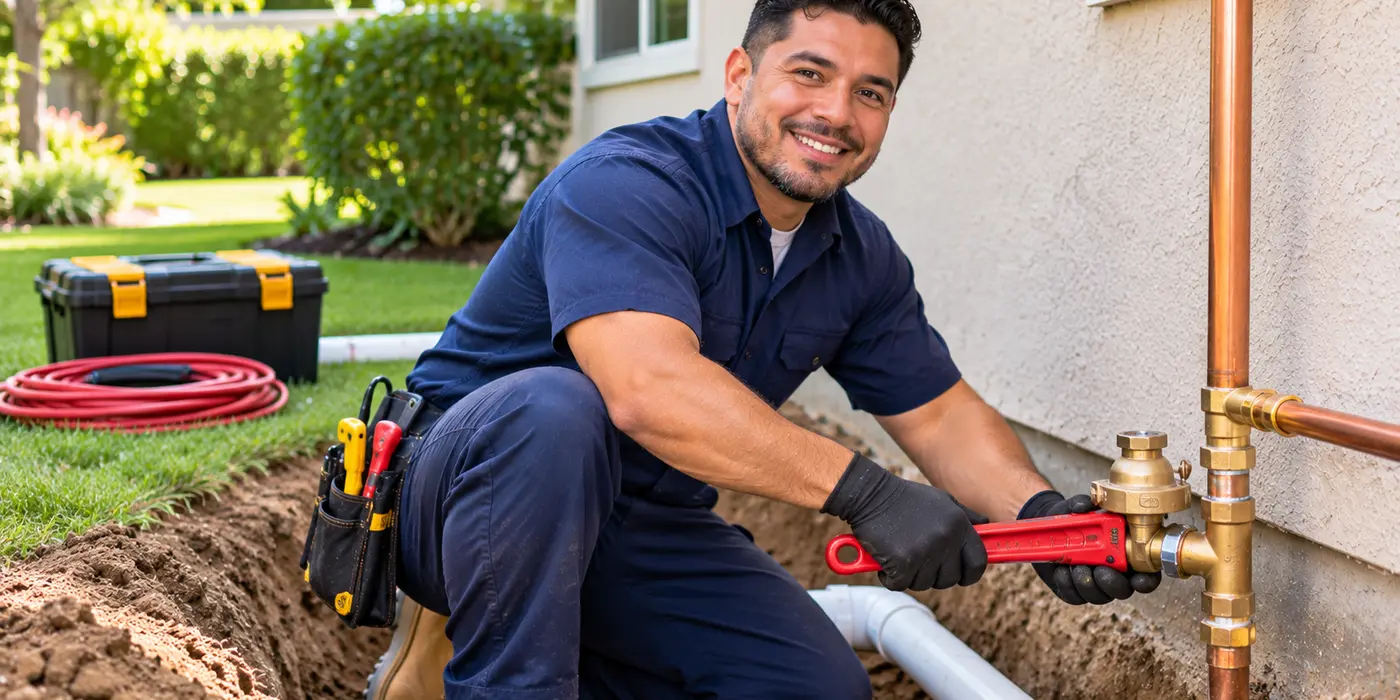
A gurgling toilet or a tub drain that slows down becomes a sewer-line problem when wastewater starts rising in the shower, floor drain, or lowest fixture. The blockage then affects more than the fixture where it first appeared; it can force sewage across tile, grout, and cabinet bases.
After a week, a partial blockage can hold solids at a damaged joint or root mass, and each flush adds more material to the pipe. Over a month or a rainy season, an open break can soften soil around the line, spread sewage odor through the yard, and leave a larger section of pipe to uncover.
This work should not wait once sewage backs up, fixtures gurgle together, or a wet patch appears above the line. A sewer lateral carries waste away from the house, so a restriction or break can turn a contained pipe defect into contamination inside or outside the home.
Gurgling toilets and sewer odor
Sewage backing into the shower, tub, or floor drain points to a restriction farther along the sewer line than the fixture itself. A toilet that bubbles while a washing machine drains can also indicate that the line cannot move air and wastewater past the same obstruction.
Strong sewer odor in the yard, a soft wet patch above the pipe route, or unusually green grass can point to a cracked sewer pipe or leaking joint underground. A drain that repeatedly slows after clearing may be collecting debris at root intrusion, an offset joint, or a collapsed section.
Those symptoms can look alike from inside the house, but they can lead to very different repairs. A camera inspection and line location separate a blockage, root-filled joint, broken pipe, and failed connection before we know which material and access work the repair requires.
Camera inspection and locating
During an inspection, we run a sewer camera through an accessible cleanout to check for standing water, root intrusion, separated joints, cracks, and pipe collapse. We trace the camera head with a locator above ground, identify the pipe route, and note the pipe material, diameter, and approximate depth where the defect appears.
The camera run and locating commonly take 30 to 60 minutes when the cleanout is accessible and the line can accept the camera. The same visit usually covers the camera check, route marking, and replacement of an accessible cleanout cap or fitting when needed; excavation, pipe replacement under a slab, permit work, and ordered fittings are scheduled separately.
Pipe material and access
Pipe material, the damaged section's route, and access to the cleanout drive the scope of a sewer repair. An older cast-iron or clay line with separated joints may need a longer exposed section than a short PVC break near an open side yard.
Access becomes more involved when the pipe runs beneath a driveway, patio, landscaping, slab, or utility line instead of bare soil. A seized cleanout cap, a buried cleanout, or a transition coupling that must be ordered can add preparation before the damaged pipe is reached.
Municipal connection points and work near the property line can also require a permit or sign-off before the trench is closed. We use the camera findings and route marks to identify those conditions before repair work is planned.
Cleanout location and fixtures
The cleanout location and the affected fixtures help us plan the camera entry point and bring the appropriate fittings. Tell us which room first showed the problem, whether the toilet, shower, tub, or floor drain is backing up, and whether any fixture is running now. If you know when the sewer line or a cleanout fitting was last replaced, include that age with the pipe material if it is known. Describe whether the cleanout is visible beside the house, inside a garage, beneath a cap in the yard, or blocked by a deck, shrubs, or concrete. Call The Richardson Plumber at (972) 435-0512 before a backup carries more sewage through the lowest drain in the house.
Next: water pressure repair, or back to the home page.